
CRE Brokers: The Key to Overcoming Objections

Have you ever seen the Karate Kid?
No, not the new one with Jackie Chan. The original, the classic. Hopefully you youngsters still know what I’m talking about.
In the movie, Daniel LaRusso wants to learn karate. He seeks out Mr. Miyagi, a quiet but wise mentor who agrees to train him, but in the strangest way possible.
Instead of practicing punches and kicks, Miyagi has Daniel doing mundane chores.
Wax the car. Paint the fence. Sand the floor.
Daniel grows frustrated. He thinks Miyagi is wasting his time. But when the moment comes to actually defend himself, Daniel realizes something:
All those repetitive motions? They weren’t just busy work. They had trained his body to react instinctively.
Without even thinking, he could block, counter, and defend himself.
Handling objections in CRE brokerage works the same way.
If you’re prospecting regularly (which you should be), you will hear objections.
“I’m happy with my current broker.”
“I’m not looking right now.”
“Your fees are too high.”
Lots of brokers fear them, even if they know they’re coming. They hesitate to pick up the phone because they don’t want to hear no.
Here’s a big shift for you: objections aren’t the end of the conversation, they’re the beginning.
The Brokers Who Win Are the Ones Who Prepare
Just like athletes train for every possible scenario, top brokers anticipate objections before they happen.
A quarterback doesn’t walk onto the field blindly. He (and his teammates) spent hours studying the opposing defense, prepared different plays, and knows exactly how to adjust when things don’t go as planned.
Same with basketball. A team doesn’t show up to a game without practicing how to break a full-court press. They run drills, so when the pressure is on, they already know what to do.
Objection handling in brokerage is no different.
- You expect objections.
- You prepare responses.
- You stay composed and redirect the conversation.
It’s not about arguing. It’s about deflecting.
Task: What are your four major objections?
Now, a practical strategy. Write down the top four objections you hear the most when you’re prospecting.
Think about your last 10 calls. What did prospects say? It might sound something like this:
- “I’m not selling.”
- “I already have a broker.”
- “I’m not interested.”
- “Now’s not the right time.”
Think about what your ideal avatar says most often.
Once you’ve identified these, you now have a playbook to create. Because if you know these objections are coming, why wouldn’t you already have the perfect response ready?
An example (and how to solve it):
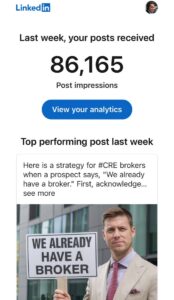
I posted about how to respond when a prospect says “We already have a broker”.
This is a common one. Here’s how to deal with it:
Step 1: Acknowledge Their Perspective
People don’t like being told they’re wrong. If you immediately try to convince them to switch brokers, you’ve already lost.
Instead, validate their decision:
“That’s terrific! It’s great to hear that you recognize the value a market expert can bring to you and your business.”
Now, you’ve planted a question in their mind: Is my current broker truly a market expert?
Step 2: Ask What They Value Most
Gather intel. Find out what matters to them.
“Can you tell me what you value the most about your current broker?”
If they hesitate or struggle to answer, that’s a signal. They may not be as thrilled with their broker as they initially said.
If they do answer, you’ve gained valuable insight into their expectations (information you can use in follow-ups).
Step 3: Offer a Low-Commitment Way to Stay in Touch
Don’t push for a hard yes right away. Give them an easy way to stay engaged.
“Many of the landlords/tenants/investors on our mailing list appreciate our market updates, would it be okay for me to add you so you can stay informed?”
This keeps the relationship warm. And over time, as they see your market insights and success stories, they’ll start wondering… Why am I not working with this broker?
The Brokers Who Prepare, Win
Just like Daniel LaRusso trained with repetitive motions until blocking became second nature, you need to train yourself to handle objections naturally.
The best brokers don’t wing it.
They expect objections.
They practice handling them.
They turn objections into opportunities.
Roleplay with your team. Write down your responses. Test different scripts.
Because when you’re prepared, you don’t fear objections. You welcome them.