AI for Commercial Real Estate Brokers: 7 Jobs to Assign Inside Your Brokerage
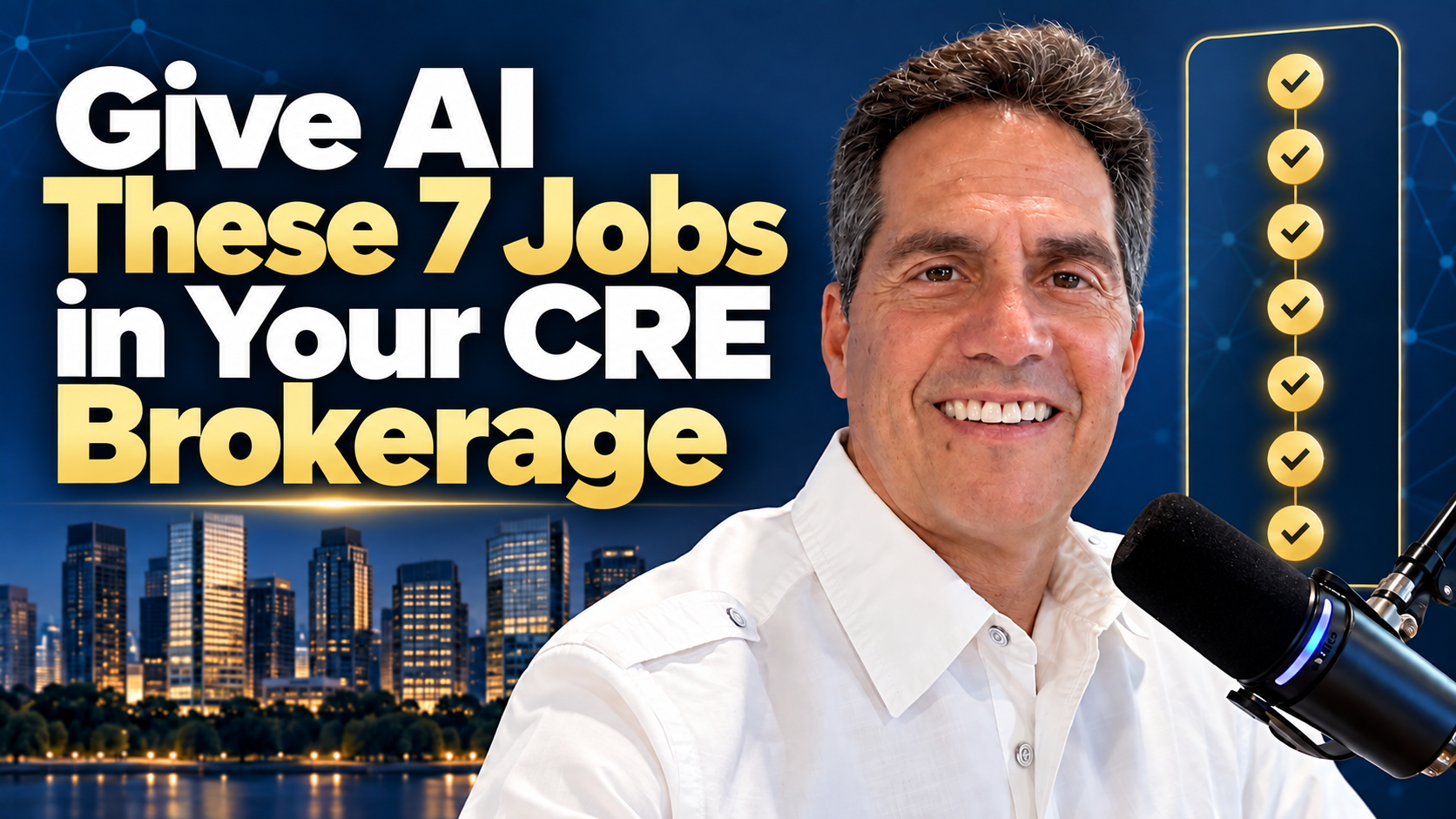
The most effective way for commercial real estate brokers to use AI is to give it defined jobs. Each job gets specific inputs, a clear standard for the output, and a set place in the work week. Rod Santomassimo, founder of The Massimo Group, outlines seven of those jobs and organizes them into four operating systems: planning the day, building new business, winning meetings, and protecting the pipeline while building market authority.
None of it requires you to become a tech expert. It requires the same discipline you already apply to your best business habits, pointed at a tool that’s ready to work the moment you hand it a clear assignment.
Why AI Turns Into Another Unused Subscription
Most established brokers have tried AI. They’ve asked it a question or two, maybe had it clean up an email. Then the week took over.
Rod describes the pattern plainly. You open a blank chat. You ask a broad question. You get a broad answer. Then you go back to the inbox, the phone, the deal in front of you, and the dozens of tasks that still depend on you.
That cycle has a real cost in a relationship business. The research gets delayed. The follow-up gets rushed. Meeting preparation happens 15 minutes before the call. Pipeline reviews get pushed to next week. And every task keeps landing back on the broker’s desk.
Picture what that looks like over a quarter. A follow-up goes out two days later than you promised. An owner raises a concern in the meeting that you could have anticipated with an hour of preparation. A deal sits in the same stage for six weeks because nobody flagged it. None of those moments feels like a crisis on its own. Together, they shape how prospects and clients experience working with you.
The Fix Is a Job Description
Rod’s answer is the same approach a good broker uses when bringing on an analyst or an assistant. Give AI a job description. Give it the right inputs. Give it a standard for the outputs. Then put that job on a recurring schedule.
A defined job changes the quality of the work because it changes the quality of the request. AI stops guessing what you need and starts working from your goals, your market, and your calendar.
Rod’s seven jobs fit within four simple operating systems that mirror the situations brokers face over and over again. The Massimo Group has organized its own AI broker coaching around those same situations.
Operating System 1: Plan the Day
Job 1: The Daily Priority Coach
The principle behind the first job is simple. AI becomes more useful when it understands your priorities and works with you on your schedule.
The common mistake is typing, “What should I do today?” AI has no idea what your goals are, which appointments are on your calendar, which opportunities are active, or what you promised a client yesterday. As Rod puts it, a vague input creates a vague plan.
The daily priority coach works in two sessions.
At the start of the day, give it your three major goals, your appointments, the opportunities that need movement, and anything overdue. Ask it to identify the three actions most likely to move revenue or relationships forward. Then ask a second question: what should wait?
At the end of the day, tell it what happened. What moved, what stalled, and what you avoided. Then ask it to identify tomorrow’s first important action.
Sequencing by Consequence and Opportunity
Rod offers a scenario every producer will recognize. You have a listing presentation at 2:00. You have 12 people who need follow-up. And there’s a proposal that probably should have gone out yesterday.
Left to habit, most brokers work whichever email sits at the top of the inbox. The daily priority coach helps you sequence the day based on consequence and opportunity. That might mean the proposal goes out first thing, the presentation gets a focused prep block, and the follow-ups are sorted by which relationships carry the most near-term value.
The end-of-day question about avoidance deserves attention, too. Every broker has a call they keep pushing. Naming it once a day, to a coach that will raise it again tomorrow, makes it much harder to keep pushing.
Operating System 2: Build New Business
The second operating system holds two connected jobs. One finds relevance. The other turns that relevance into outreach.
Job 2: The Prospect Researcher
AI can assemble and organize public information quickly when you give it a specific research question.
The mistake is asking, “Tell me about this company,” or “Tell me about this owner.” That request produces a pile of information with no connection to the conversation you actually want to have.
Give the prospect researcher a frame. Rod’s list of inputs includes the market, the property type, the prospect profile, the likely business issue, and the purpose of the outreach. Then ask for three things: relevant public facts, possible changes affecting the prospect, and the five questions you should ask before contacting them.
The final step is the one that protects your reputation. Verify the important facts against the original public sources. In Rod’s words, AI can accelerate the research. You remain responsible for the accuracy and the judgment.
Job 3: The Outreach Writer
The research becomes an opening statement, an email, a letter, or a follow-up message. That’s the outreach writer’s job.
Requesting “a great prospecting email” with no context usually produces something that sounds like it was sent to everyone in your database. Experienced owners can spot that in the first line.
The outreach writer needs the property type, the market, the prospect profile, the likely motivation, the reason for contacting them now, and the single action you want them to take. Ask for a first draft in your natural voice. Then edit it until it sounds like something you would actually say.
That last step matters. AI can produce a fast, organized first draft. Your voice, your history in the market, and your read on the owner are what make the message credible.
How Research and Outreach Work Together
Rod illustrates the connection with an industrial broker approaching the owner of an older distribution building. The research job identifies relevant public information and market conditions. The outreach job takes one meaningful issue from that research and turns it into a concise reason for the call.
Two jobs, one connected workflow. “Research creates relevance, and relevance gives the research a legitimate reason to exist,” Rod explains.
For a deeper look at how relevance shapes prospecting conversations, see [INTERNAL LINK: Massimo Group prospecting resources].
Operating System 3: Win the Meetings
Jobs four and five help you prepare before the pressure is real.
Job 4: The Meeting Strategist
Preparation improves when you organize the client’s situation, your questions, and your positioning before you walk into the room.
The mistake Rod sees is asking AI to make the presentation prettier while leaving the conversation itself unexamined. Slides matter far less than what you ask, what you understand, and how clearly you explain your value.
Tell the meeting strategist who you’re meeting, what they own or occupy, the likely assignment, what may be changing in their situation, your desired outcome, and the competition you expect. Ask it for the questions you should ask, the issues you need to understand, and the clearest way to explain your value.
The output is a preparation document. You still lead the conversation. The document makes sure you walk in having already thought through the owner’s position, the likely concerns, and the points that set you apart from the other brokers in the running.
Job 5: The Objection Sparring Partner
Rod calls this one of the most useful jobs on the list.
Start by listing the objections you expect. Fees, timing, experience, market conditions, or your proposed approach. Then tell AI to play the prospect. Have it challenge your answers, ask follow-up questions, and point out where your response becomes defensive, vague, or too long.
Rod’s example is a multifamily owner interviewing several brokers who may push back on your fee. With a sparring partner, you can rehearse that exact conversation before the meeting. You can test three different responses. You can sharpen the questions you ask after the objection, which is often where the conversation turns.
The value comes from the practice. When the owner raises the fee in the room, it’s far less disruptive, because you’ve already heard it and you’ve already answered it out loud.
For more on preparing for competitive owner meetings, see [INTERNAL LINK: listing presentation resources].
Operating System 4: Protect the Pipeline and Build Authority
The final operating system covers jobs six and seven. One keeps current opportunities honest. The other builds the reputation that creates future ones.
Job 6: The Pipeline Auditor
Structured information makes weak spots easy to see.
The mistake is asking AI, “What do you think about my pipeline?” and handing it a random collection of notes. Rod recommends a simple table with these columns:
- Opportunity
- Current stage
- Last meaningful action
- Next action
- Next action date
- Likely obstacle
- Your confidence level
Rod adds an important caution here. Remove confidential details, or use only the system approved for that information. Client and deal data deserve the same care in an AI tool that they get everywhere else in your business.
Then ask the pipeline auditor to flag opportunities with no clear next step, overdue follow-ups, deals sitting too long in a stage, and too much dependence on one or two transactions.
That last flag is worth a closer look. A pipeline that looks healthy in total can still rest on a single large assignment. Seeing that concentration early gives you time to rebalance your prospecting before a delay or a lost deal shows up in your income.
As Rod puts it, you still make the call. AI helps you see where the call is needed.
Job 7: The Market Authority Builder
Clients value information when you connect it to a decision they need to make.
The mistake is asking for ten generic market trends and repeating them in a newsletter. Owners can find generic trends anywhere.
Give the market authority builder the submarket, the asset class, the client type, and the purpose of the conversation. Ask for current talking points, questions, and implications that could matter to your specific audience.
Rod is direct about the next two steps. Verify every factual claim. Then add your judgment.
If vacancy, financing, insurance, new construction, tenant demand, or ownership costs are changing, the broker’s value comes from explaining what that development could mean for this property or for this owner. AI can help you organize the information. Your point of view is what turns it into advice.
The output can support a call, a meeting, a short market update, or a client-specific recommendation. It becomes useful because you supplied the context and the perspective.
Where Your Judgment Stays in Charge
A thread runs through all seven jobs. AI handles speed and organization. The broker keeps responsibility for accuracy, voice, confidentiality, and the final decision.
You verify the prospect research. You edit the outreach until it sounds like you. You lead the meeting. You decide which pipeline flags deserve action. You add the judgment that makes a market update worth reading.
Rod’s point to experienced brokers is that they already have the hard-to-replicate assets: the relationships, the market knowledge, and the judgment. These seven jobs support that experience throughout the week. They give it more time and better preparation to work with.
How to Install the Seven Jobs Without Starting a Big Project
Rod’s implementation advice is intentionally small. Start with the daily priority coach and use it tomorrow morning. Then connect the prospect researcher to the outreach writer on one real prospect. Before your next important meeting, bring in the meeting strategist and give the objection sparring partner a test. At the end of the week, give the pipeline auditor a clean, non-confidential version of your opportunity list, and ask the market authority builder to help you prepare one useful insight for next week’s conversations.
Three habits keep the jobs working over time:
- Save each prompt under one job name.
- Improve the prompt when the output misses its mark.
- Run it again at the same point in your work week.
“Knowing seven jobs will not change the business,” Rod says. “Assigning them, scheduling them, and improving them will.”
His recommendation is to choose one job, just one, and install it today. Add the next job when the first becomes part of your normal routine. The video walks through each job in more detail, including how the four operating systems fit together across the week.
Frequently Asked Questions
How can commercial real estate brokers use AI effectively?
Give AI defined jobs with clear inputs, an output standard, and a recurring schedule. Rod Santomassimo outlines seven: daily priority coach, prospect researcher, outreach writer, meeting strategist, objection sparring partner, pipeline auditor, and market authority builder.
What should a broker give AI to plan the day?
Share your three major goals, your appointments, the opportunities that need movement, and anything overdue. Ask for the three actions most likely to move revenue or relationships forward, and ask what should wait.
Can AI do prospect research for commercial real estate?
Yes, when you give it a specific research question. Include the market, property type, prospect profile, likely business issue, and outreach purpose. Always verify important facts against the original public sources.
Will AI-written prospecting emails sound generic?
They often do when the request has no context. Give AI the prospect profile, likely motivation, reason to reach out now, and the one action you want. Then edit the draft until it sounds like you.
How can AI help brokers handle fee objections?
Ask AI to play the prospect and challenge your answers. It can point out where your response sounds defensive, vague, or too long, so you can rehearse and refine before the real meeting.
Is it safe to put pipeline information into AI?
Remove confidential details first, or use only the system your firm has approved for that information. A clean opportunity table still gives AI enough structure to flag stalled deals and overdue follow-ups.
Do brokers need technical skills to use AI this way?
No. These jobs rely on clear inputs and a consistent routine. The broker’s market knowledge and judgment do the heavy lifting.
Which AI job should a broker start with?
Rod recommends starting with the daily priority coach tomorrow morning, then adding one job at a time as each becomes part of your normal routine.
Put All Seven Jobs to Work With MAC
If you want an AI coach to help you complete these tasks and much more, explore MAC, the Massimo AI Coach, trained exclusively on The Massimo Group’s methods. Learn more at massimo-group.com.